
State Lands, Earmarked for Schools
Every year, millions of dollars flow directly into local classrooms to boost student learning—without costing taxpayers an extra dime.
When Utah was made a state in 1896, Congress had designated parcels of land to be used to support public institutions, like schools. The Utah Trust Lands Administration manages the revenue from these lands and resources, giving schools millions of dollars each year to invest in programs that benefit students.
“Trust Lands money is significant funding for schools,” explains Dave Mower, secondary supervisor and administrator over School LAND Trust programs for Alpine School District. “The average per pupil amount is around $186 this year, and our total district allocation is more than $15 million.”
The Trust Lands Administration oversees the development of those land resources to the benefit of public schools. Revenue from the Trust goes into a fund and is disbursed to schools through a program called LAND Trust, which stands for “Learning And Nurturing Development.”
Interest and investment returns are distributed annually—the principal grows in perpetuity to benefit current and future generations of students.
“The LAND Trust system is a great example of how money can be generated without raising taxes and given directly to schools to solve problems with their community,” said Mower.
Local Control: Parents Drive the Decisions
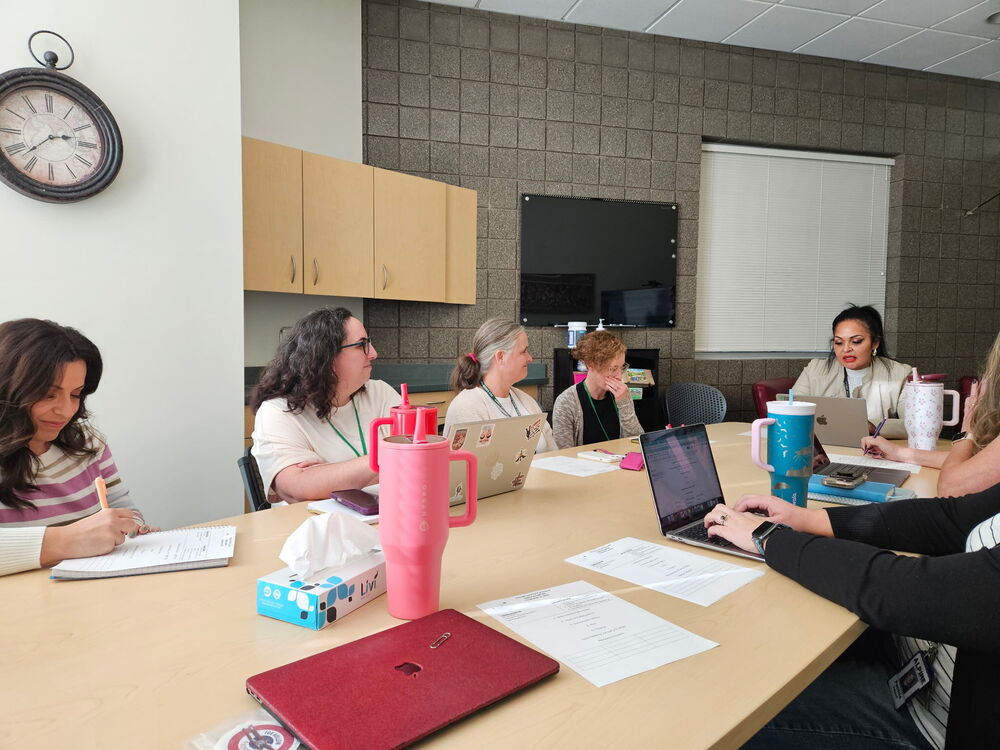
Parents help decide how the money is spent at each school. The Trust Lands Administration allocates money directly to schools based on the number of students at each school, and committees called School Community Councils (SCC) have the authority to determine how the money is spent.
“Our SCC plays an important role in helping us determine how LAND Trust funds can have the greatest impact on student learning,” said Eric Marianno, principal at Vista Heights Middle School.
School Community Councils are made up of mostly parents, with some teachers and the school principal.
“I tell parents that being on the SCC is one of the best ways to influence the school without requiring a huge time commitment,” said Ryan Wells, principal at Lindon Elementary. “We generally meet every other month during the school year, and we have a set of things we cover in addition to what the state requires.”
School Community Councils help create a School LAND Trust Plan each year that addresses their school's greatest academic needs. Trust Lands money goes directly to address those needs.
Direct Impact in Alpine School District Classrooms
Common Uses of LAND Trust in Alpine School District are hiring aides, tutors, and literacy specialists; buying classroom technology; supporting students through test preparation or enrichment programs; and professional development for educators.
“Most schools use the money for extra teachers and extra support personnel for students,” said Mower.
As one of the largest middle schools in Alpine, Vista Heights puts money toward paying for teachers to teach extra class periods beyond their typical contract.
“This allows us to offer additional class sections, reduce class sizes, and provide students with greater access to the courses and support they need,” said Marianno. “We also use LAND Trust funds to provide substitutes for teacher collaboration time and to support summer collaboration days,” he said.
At Lindon Elementary, the funding pays for a full-time school counselor, a computer teacher, and helps pay for a music teacher.
“My experience has been that effective adults in a school building have a greater impact on positive change for students than effective computer or book programs,” said Wells. “Because of that, we invest heavily in people rather than resources.”
Parents can see their school’s Trust LAND plan at the state website, and beginning October 20, on their school’s website.
Getting Involved
Parents can also attend open SCC meetings as an observer or run in annual SCC elections. According to Wells, the benefit extends having influence on how resources are used.
“SCC meetings and developing LAND Trust budgets are a great way to get to know and build rapport with involved parents at the school,” he said. “Those key parents often become some of -our greatest advocates for the school and administration when people have questions about what the school is doing to help kids.”
Those who participate on a SCC will also gain powerful knowledge about how schools prioritize efforts.
“The most emphasized pieces are studying and establishing the greatest needs of the school,” said Mower. “Parents will learn how to allocate the budget to those needs, and advise the school leadership about school successes and concerns.”
Learn More:
Alpine SD School Community Councils: https://www.alpineschools.org/page/school-community-council
Utah Trust Lands Administration page: trustlands.utah.gov